
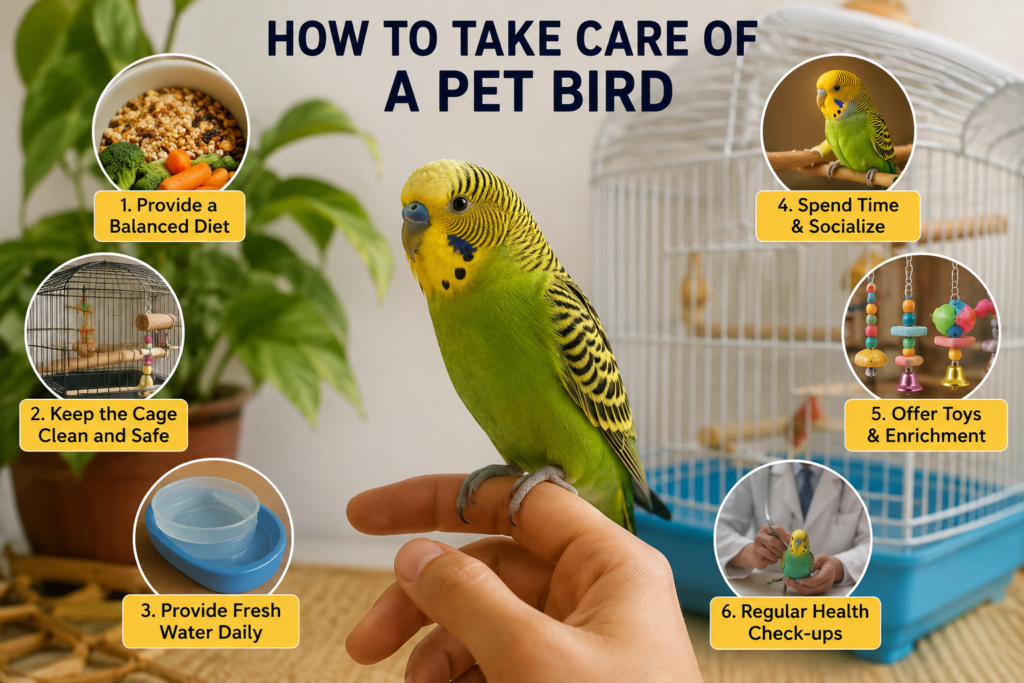
How to Take Care of a Pet Bird Keeping a pet bird can be one of the most rewarding experiences for animal lovers. Birds are intelligent, colorful, social, and full of personality. Whether you own a budgie, cockatiel, canary, parrot, or lovebird, understanding proper bird care is essential for your bird’s happiness and long-term health.
This complete bird care guide will teach you everything you need to know about how to care for birds properly. From choosing the right cage to creating a healthy bird feeding guide, this article is packed with practical advice for beginners and experienced bird owners alike.
Why Birds Make Great Pets
Birds are unique companions that provide entertainment, affection, and companionship. Unlike many pets, birds can communicate, mimic sounds, and build strong emotional bonds with their owners.
Some benefits of owning a pet bird include:
- Birds are highly intelligent
- Many species are affectionate
- They are beautiful and entertaining
- Birds can adapt well to apartment living
- Some species can learn tricks and words
However, birds also require patience, attention, and daily care. Before bringing a bird home, it’s important to understand the responsibilities involved.
Choosing the Right Bird for Beginners
Not all birds are equally easy to care for. Some species require more attention, training, and social interaction than others.
Best Pet Birds for Beginners
| Bird Type | Personality | Noise Level | Difficulty |
|---|---|---|---|
| Budgie | Friendly & playful | Low | Easy |
| Cockatiel | Affectionate | Medium | Easy |
| Canary | Independent | Low | Easy |
| Lovebird | Energetic | Medium | Moderate |
Budgies and cockatiels are often recommended as beginner birds because they are social, adaptable, and relatively easy to manage.
Quick Tip:
Choose a bird species that matches your lifestyle and available time.
Setting Up the Perfect Bird Cage
A proper cage setup is one of the most important aspects of beginner bird care. Birds need enough room to move comfortably, stretch their wings, and stay mentally stimulated.
What Should a Bird Cage Include?
Your bird’s cage should contain:
- Comfortable perches
- Food and water bowls
- Safe bird toys
- Swings and ladders
- Cage liners
- Adequate ventilation
Ideal Cage Placement
Where you place the cage matters just as much as the cage itself.
Best Locations:
- Bright rooms with natural light
- Quiet family areas
- Draft-free spaces
- Rooms with moderate activity
Avoid:
- Kitchens
- Direct sunlight
- Loud entertainment systems
- Cold air vents
Did You Know?
Cooking fumes from non-stick pans can be extremely dangerous for birds.
Bird Feeding Guide
A balanced diet is the foundation of good bird health. Many beginners make the mistake of feeding birds only seeds, but birds need a variety of nutrients to thrive.
What Should Birds Eat?
A healthy bird diet should include:
1. High-Quality Pellets
Pellets contain balanced nutrition and should make up a major portion of your bird’s diet.
2. Fresh Vegetables
Healthy vegetables include:
- Spinach
- Carrots
- Broccoli
- Kale
- Bell peppers
3. Fresh Fruits
Birds enjoy:
- Apples
- Bananas
- Grapes
- Mangoes
- Berries
4. Healthy Seeds
Seeds are good in moderation but should not be the main food source.
Foods Birds Should Never Eat
Some foods are toxic to birds and should always be avoided.
| Dangerous Foods | Why They’re Harmful |
|---|---|
| Chocolate | Toxic to birds |
| Avocado | Can cause heart problems |
| Alcohol | Extremely dangerous |
| Caffeine | Harmful to the nervous system |
| Salty foods | Can damage kidneys |
Always research foods before offering them to your bird.
Importance of Fresh Water
Birds require constant access to clean water. Dirty water bowls can quickly grow bacteria.
Water Care Tips
- Change water daily
- Clean bowls thoroughly
- Use clean drinking water
- Avoid placing water near droppings
Hydration plays a major role in maintaining healthy feathers and digestion.
Socializing and Bonding With Your Bird
Birds are social creatures that need daily interaction. A lonely bird may become aggressive, stressed, or depressed.
Ways to Bond With Your Bird
- Talk to your bird regularly
- Offer treats by hand
- Spend time near the cage
- Use positive reinforcement
- Play interactive games
Birds recognize voices and routines over time, helping build trust and companionship.
Expert Tip:
Consistency is the key to building a strong relationship with your pet bird.
Bird Training Basics
Many birds can learn tricks, commands, and even speech.
Simple Training Tips
Start With Basic Commands
Teach commands like:
- Step up
- Come here
- Stay
Reward Good Behavior
Use healthy treats and praise when your bird follows instructions.
Keep Sessions Short
Birds learn best in short, consistent sessions.
Be Patient
Never punish your bird physically or yell during training.
Training helps prevent behavioral problems while keeping birds mentally stimulated.
Bird Toys and Mental Stimulation
Birds are intelligent animals that require enrichment to avoid boredom.
Best Types of Bird Toys
- Puzzle toys
- Mirrors
- Bells
- Chewing toys
- Climbing ropes
- Foraging toys
Rotate toys regularly to maintain interest.
Quick Tip:
Bored birds often develop destructive habits like feather plucking.
Bird Grooming and Hygiene
Proper grooming is essential for maintaining a bird’s health and comfort.
Grooming Includes:
- Nail trimming
- Feather care
- Beak maintenance
- Bathing
Most birds enjoy mist baths or shallow water baths several times a week.
Signs of a Healthy Bird
A healthy bird usually displays:
- Bright eyes
- Smooth feathers
- Good appetite
- Active behavior
- Regular chirping
- Healthy droppings
Monitoring your bird daily helps you notice changes early.
Common Signs of Illness in Birds
Birds often hide sickness until symptoms become serious.
Warning Signs Include:
- Fluffed feathers
- Loss of appetite
- Sleeping excessively
- Breathing difficulties
- Weight loss
- Sudden aggression
If you notice unusual behavior, contact an avian veterinarian immediately.
Cleaning Your Bird’s Cage
A clean environment prevents disease and keeps birds comfortable.
Daily Cleaning Tasks
- Replace food and water
- Remove droppings
- Clean cage liners
Weekly Cleaning Tasks
- Wash perches
- Disinfect toys
- Deep clean the cage
Regular cleaning reduces bacteria and odor buildup.
Common Beginner Bird Care Mistakes
Many new bird owners unintentionally make mistakes that affect their bird’s health.
Mistakes to Avoid
Feeding Only Seeds
Birds need a balanced diet, not just seeds.
Ignoring Social Needs
Birds require daily interaction.
Small Cages
Birds need room to move and exercise.
Unsafe Household Products
Strong chemicals, candles, and fumes can harm birds.
Lack of Veterinary Care
Annual checkups are important even if the bird appears healthy.
Beginner vs Advanced Bird Care Comparison
| Beginner Bird Care | Advanced Bird Care |
|---|---|
| Simple feeding routines | Specialized diets |
| Basic training | Advanced trick training |
| Small bird species | Large parrots |
| Basic toys | Complex enrichment systems |
| Easier maintenance | Higher attention needs |
Starting with beginner-friendly birds allows new owners to gain confidence and experience.
Creating a Safe Environment for Birds
Bird-proofing your home is important because birds are naturally curious.
Safety Tips
- Close windows and doors
- Hide electrical wires
- Avoid toxic plants
- Turn off ceiling fans
- Keep birds away from smoke
Bird safety should always come first.
Why Routine Matters for Birds
Birds thrive on consistency. Feeding, playtime, and sleep schedules help reduce stress.
Ideal Daily Routine
- Morning feeding
- Playtime and interaction
- Quiet rest periods
- Evening relaxation
A stable routine creates a happier and healthier bird.
Benefits of Owning a Pet Bird
Bird ownership offers many emotional and mental benefits.
Advantages Include:
- Companionship
- Reduced stress
- Entertainment
- Emotional connection
- Learning responsibility
Birds can become lifelong companions when cared for properly.
Frequently Asked Questions
1. What is the easiest bird for beginners?
Budgies and cockatiels are considered some of the easiest birds for beginners due to their friendly personalities and manageable care needs.
2. How often should I clean my bird’s cage?
Food and water bowls should be cleaned daily, while deep cage cleaning should be done weekly.
3. Can birds recognize their owners?
Yes. Many birds recognize faces, voices, and routines and form strong emotional bonds.
4. What foods are toxic to birds?
Chocolate, avocado, caffeine, alcohol, and salty foods should never be given to birds.
5. How long do pet birds live?
Lifespan depends on the species. Small birds may live 5–15 years, while parrots can live over 50 years.
Conclusion
Learning how to care for birds properly requires patience, dedication, and love. With the right cage setup, proper nutrition, regular social interaction, and good hygiene practices, your bird can live a long, healthy, and happy life.
This complete bird care guide provides the essential knowledge every beginner needs to become a responsible bird owner. By following these pet bird tips and maintaining a healthy bird feeding guide, you will build a strong bond with your feathered companion for years to come.